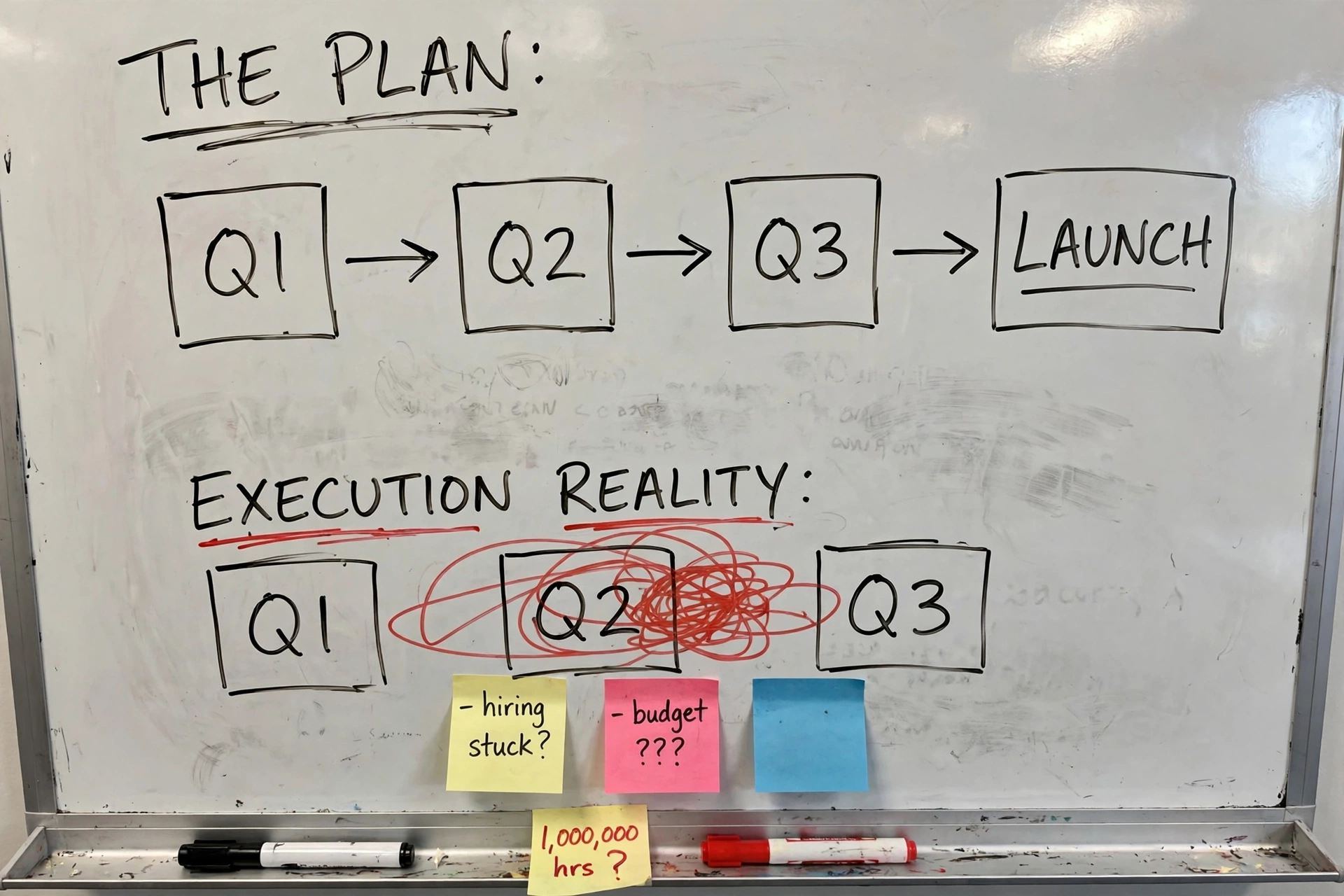
It is planning season. Every team I talk to is locking in next year's plan right now, and almost every one of them tells me the same thing in the same breath: we can defend this plan. We do not feel great about it.
That sentence deserves a pause. The plan came from leadership, with a mix of the team in it. It is coherent. It fits on the slides. And the people closest to the work already know it will not survive contact with the year, because they know what happens in the next month or two. Five new things land. A priority shifts. An executive gets reactive. Everything twists, and by spring someone is upset that the other thing did not ship, while capacity somehow keeps building underneath all of it. I wrote recently that the annual plan breaks in November. This year the cracks are visible before the ink dries.
The cause is arithmetic, not discipline. Every plan is written as if the year will only contain what is in the plan. The year never cooperates. Work arrives that nobody scheduled, nobody budgeted, and nobody voted on, and it competes for the same people the plan was counting on. I have written before about why only about 30 percent of a roadmap ends up matching the plan. The plan rarely loses to a better plan. It loses to volume.
AI just turned the volume up. Building got cheap, so ideas got cheap, and there are more of them than ever before. Someone on your team is building a prototype this weekend that lands on your plate Monday morning, fully formed and hard to say no to. It gets stranger than that. Customers are now vibe coding their own versions of what our product could look like and sending them over. It is genuinely cool. It is also crazy. Every one of those artifacts arrives with momentum behind it, and momentum is what quietly rewrites plans.
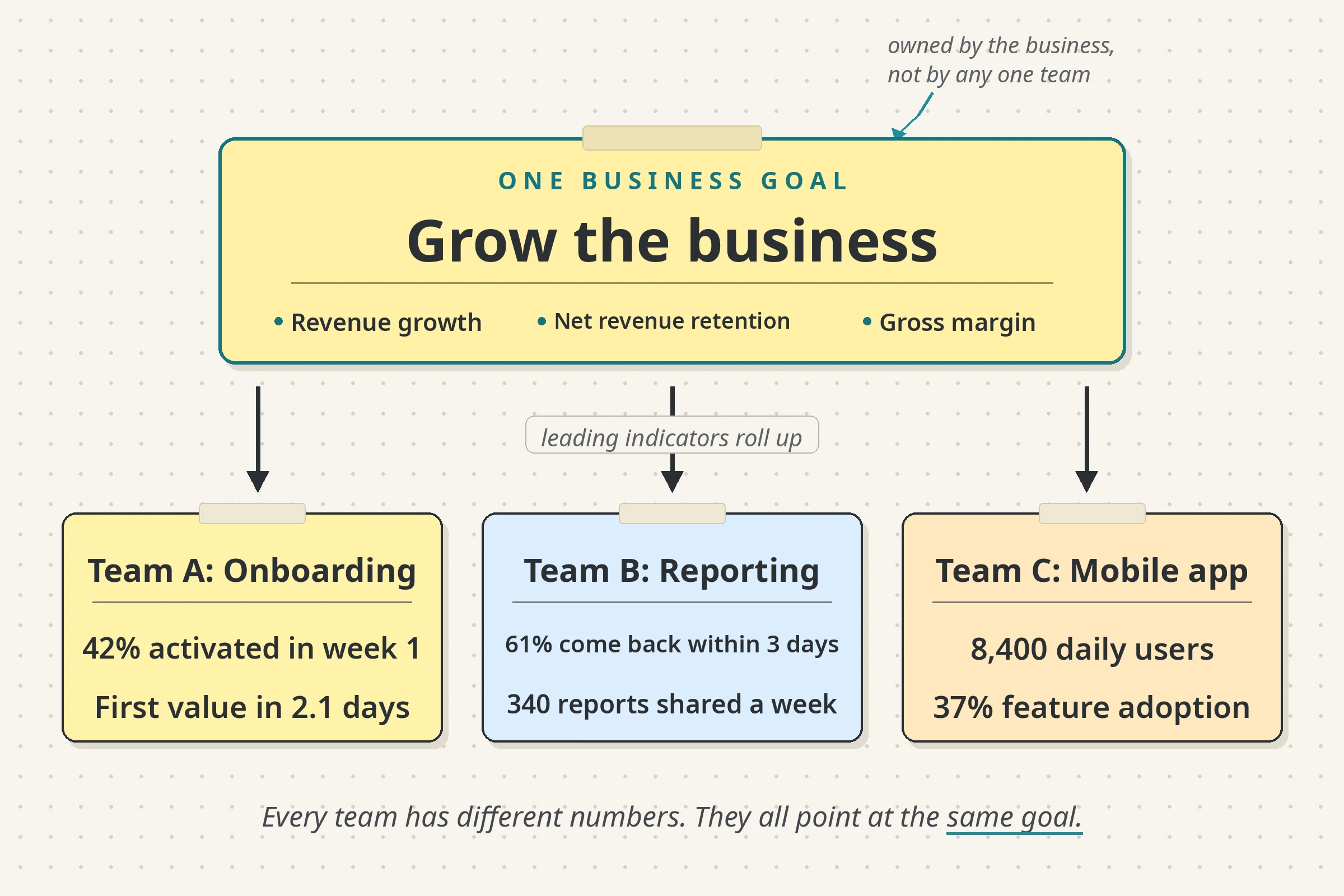
Here is the part that frustrates product leaders most. The strategy itself is usually fine. Companies think hard about it. They hire expensive consultants to get it right. The breakdown sits below that: the strategy does not carry down. Ask a team to connect this quarter's work to the company's biggest goals and you get a long pause, because the connection was never built. Researchers writing in Harvard Business Review surveyed 7,600 managers across 262 companies and found that only 55 percent of middle managers could name even one of their company's top five priorities. When the people running the work cannot name the priorities, the plan stays a document. It never becomes a direction.
So what do you do in a season when the plan is written and the flood is already scheduled? You build a wall. Decide, in plain language, what the urgent problems of this business actually are. If a real strategy exists, that answer is short and clear. Then every new thing that arrives gets one question: does this serve one of those problems, or does it wait? The wall is what lets a team hold together while the twists come. Holding tight sounds passive. It is the most active work a leadership team does all year, because the pressure to say yes restarts every single week.

The wall gets tested in small moments, not big ones. A request lands on a Monday with a senior name attached to it. It is good work. It is even useful work. The only question that matters is the one almost nobody asks out loud: which priority does this replace? If the answer is none, the plan just grew, and every date in it quietly became less true. Teams that hold the wall have a different reflex. They say yes with a trade attached, or they say not yet with a reason attached, and either way the plan on the wall stays the plan the team is actually running.
Before you finalize next year's plan, run one exercise. It takes an afternoon, and it is eye opening every time. Pull every ticket your team completed last quarter. All of them, not the highlights. Then sort them against the strategic goals of the company, or against the biggest, most urgent problems you know you need to solve. What percentage lines up? I have written before about what your last 500 tickets reveal about your strategy. The pattern holds at any size.
Most leaders guess high and land low. The gap between the two numbers is rarely a failure of effort. Your team worked hard all quarter. The gap is the work nobody put in the plan: the urgent requests, the prototypes, the favors, the escalations, quietly outvoting the strategy one ticket at a time. That gap is also the most honest input your 2027 plan can get, because it tells you the size of the wall you actually need.
I wish every team could see, in one place, the work they planned, the work that actually arrived, and which of it served the strategy, while there is still time to choose. That wish is why we built Iteright: to help leaders decide what deserves investment, keep execution aligned to it, and prove the impact when the year is done.
Run the exercise before your plan locks. Then tell me your number. I am curious how close it lands to the plan on the slides.