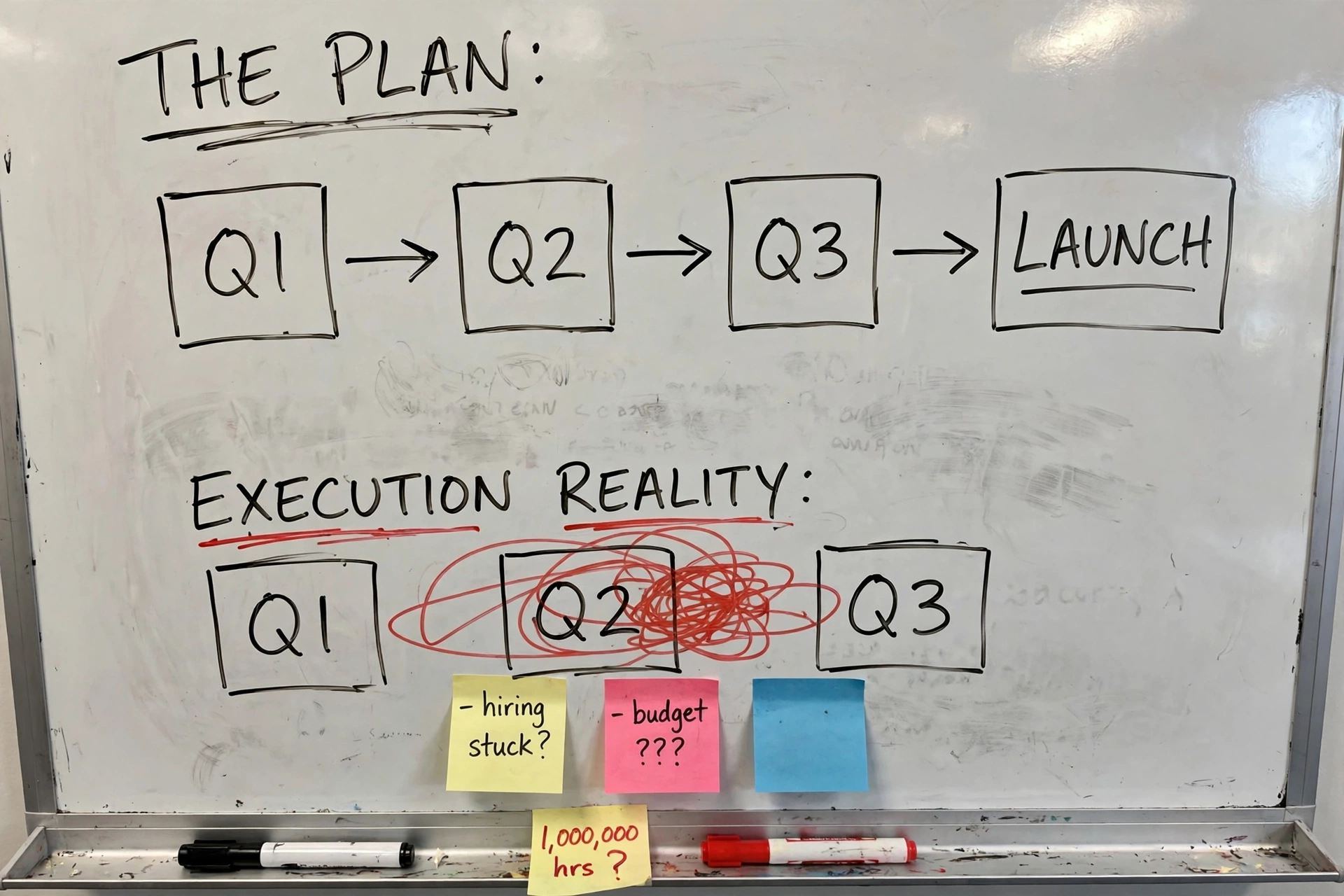
I have been asking product leaders a question lately, in hallways and on calls and over coffee: when does the annual plan actually break down?
I had my answer ready before I asked. I figured the plan holds through the holidays, starts to crack in January when the real work shows up, and by February everyone is quietly working on other things. I thought putting a date on it would be a small revelation, the kind of thing people nod at and then repeat in their own meetings.
It was a revelation. Just in the other direction. About two-thirds of the leaders I asked, ten or more of the fifteen or so I put the question to directly, gave me the same answer without hesitating: November.
November. The plan gets submitted in October. The budget gets approved. And by the end of November, before the year the plan describes has even begun, it is already old news.
Sit with that for a second. The most expensive planning exercise in the company, the one that eats the entire fourth quarter, is understood by the people who run it to be stale before it starts. And they said it the way you report weather. No drama. Just the fact of the season.
When I pushed on why, nobody blamed effort. These are serious operators. Their point was structural, and it came in two parts.
First, the world will not hold still for twelve months. The technology underneath every product plan is changing quarterly right now, sometimes faster. A plan written in October is a photograph of assumptions, and the assumptions have a short shelf life. Locking a year of work to a photograph is not discipline. It is fiction with a budget attached.
Second, even a perfect plan would not survive the building. Stakeholders change direction. A board member falls in love with something new. A customer escalates, a competitor moves, a leader leaves and takes the priorities with them. The business itself reaches in and rearranges the plan, because rearranging is sometimes the right call. So the leaders I talked to have stopped pretending the plan is the product. The product is adaptability: a team that can change direction without losing the thread of why it was going anywhere in the first place. Mankins and Richard Steele found the same pattern in Harvard Business Review: planning done once a year on a fixed calendar leaves executives making the real strategic decisions outside the process, in response to events the calendar never saw coming.
I wrote recently about the gap between the plan and the people, the distance between what leadership approved and what teams can actually run. The November answer is that gap, dated. The breakdown is not a surprise event in the middle of the year. It is scheduled, quietly, into the end of the planning cycle itself.

Here is the part of the conversation that stayed with me. For most of my career, nobody could even see the breakdown happen. The plan lived in a deck. The work lived in a ticket system. The money lived in a spreadsheet somebody's analyst maintained by hand. The people lived in a fourth place entirely. When the four drifted apart, and they always drifted apart, the only instrument that detected it was a person in a status meeting saying things feel off. Project management, for decades, was the art of holding disconnected information together by a thread and calling the thread a process.
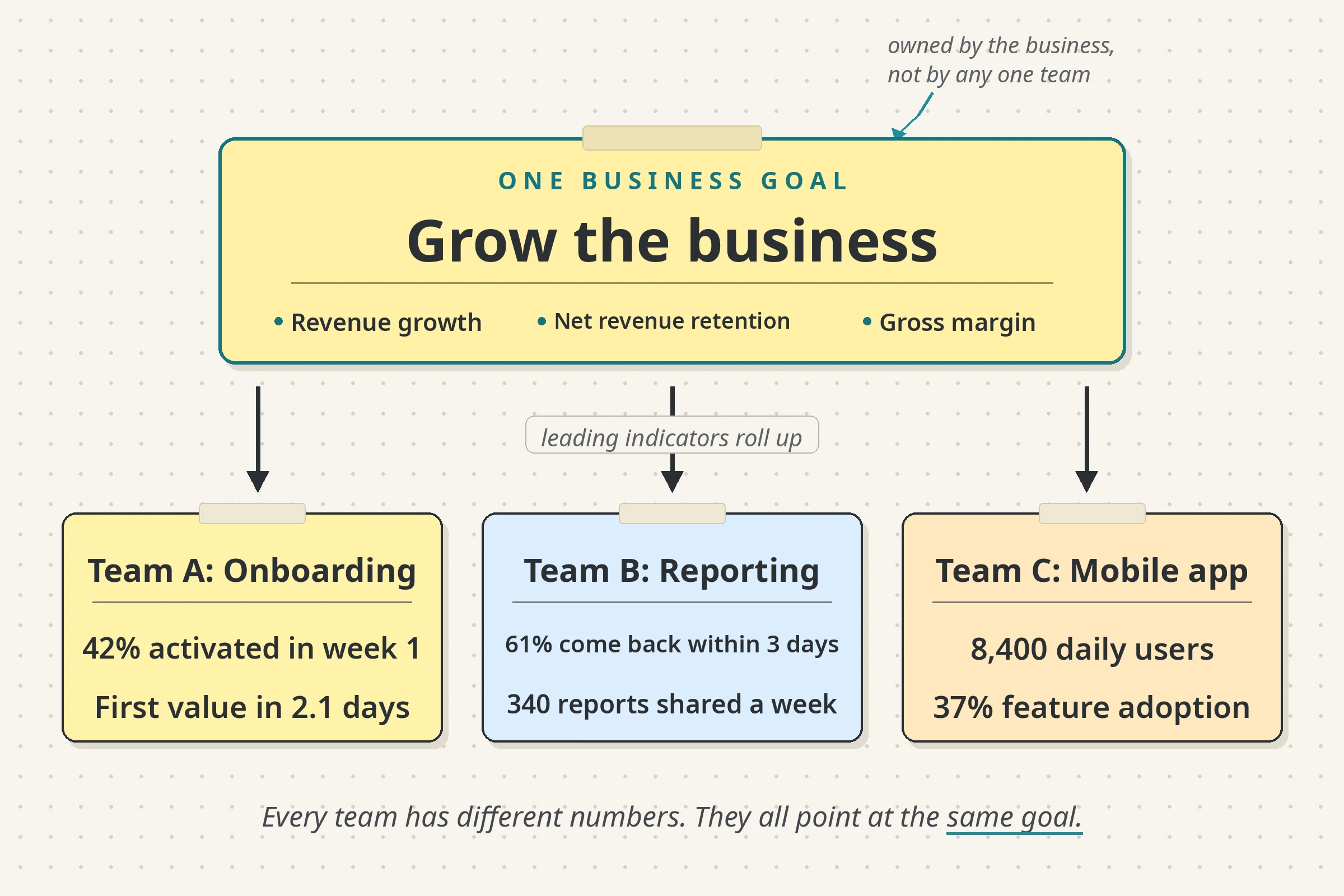
That is changing, and the leaders I talked to know it. More of them are lining their systems up: the business goals, the plan, the actual work, the people carrying it, in one connected view where a number that stops making sense gets noticed while there is still time to do something about it. The same disconnect that used to surface in June as a missed year now surfaces in November as a question somebody can still answer. I have watched what happens when capacity never gets the memo the strategy sent. Seeing it early is the whole difference.
The practical change is bigger than the tooling. A leader with a connected view stops asking for status and starts asking about the work itself: this initiative is funded for twelve people and staffed with seven, this goal has no project under it, this project answers to a goal nobody owns anymore. Those are November conversations. In the old world they were postmortems.
There is a fear underneath this, and it deserves to be said plainly. Connecting the systems means the cracks show. The places where the numbers do not line up, where a team is carrying less than the plan assumes, where we are not doing as well as we told ourselves we were: all of it becomes visible, possibly to people we would rather impress. Admitting the plan breaks in November means admitting it in the room, in front of the stakeholders who approved it. Some leaders would rather protect the story than fix the work.
But the ones I talked to are choosing the other side. Show the scars. Put the big problems in the open, where the whole team can work on them together instead of each person quietly working around them alone. An organization that can say what is broken, early and without punishment, is the only kind that actually gets to fix it. The honesty is not a confession. It is the operating advantage.
That is the wish underneath all of this: a plan you can trust because it stays connected to the work, the money, and the people as all three change. It is what we are building Iteright to do. Make the right bets. Keep execution aligned. Know what is working, while there is still time to act on it.
So here is my question, the one I have been asking product leaders. When does your annual plan break down, and who in your company is allowed to know?